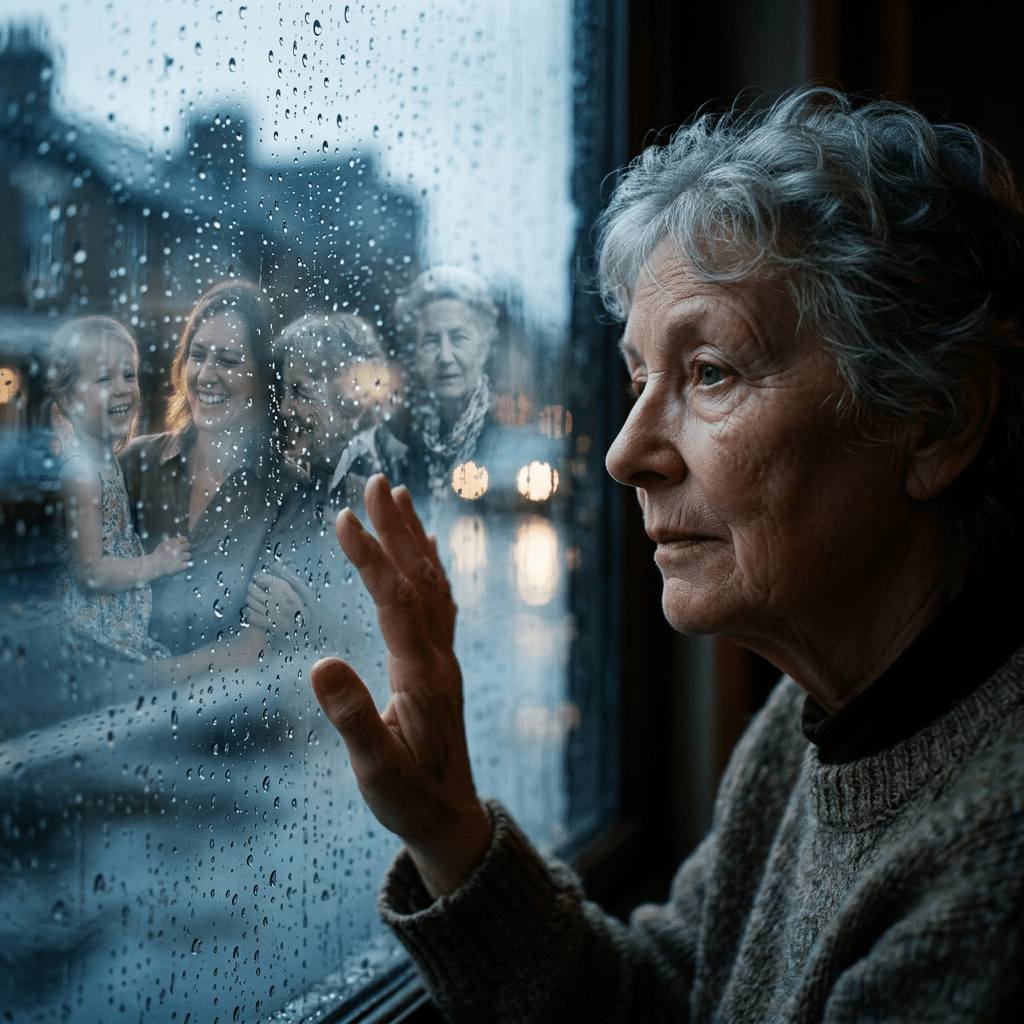
After spending time with my mother recently, I found myself reflecting on something that has shaped not only my healing journey, but also the work I do with others.
For most of our lives, we see our parents through the eyes of the child we once were.
The child who felt hurt.
The child who felt unseen.
The child who longed for something that perhaps was never fully received.
From that place, we create stories.
Stories about who our parents are.
Stories about why we struggle.
Stories about what should have been different.
And whilst those experiences are real, there often comes a point in our healing journey when a deeper question begins to emerge:
What if there is more to this story than I can currently see?
For many years, I saw my mother primarily through the lens of our relationship.
I saw the arguments.
The misunderstandings.
The moments that left emotional scars.
But as I grew older, something shifted.
I became curious about the woman behind the role of “mother.”
I began to see her fears, her insecurities, her disappointments and her own unhealed wounds.
I realised that long before she became my mother, she was someone’s daughter.
And that realisation changed everything.
The Invisible Inheritance
Many of us are carrying emotional burdens that did not begin with us.
The fear of abandonment.
The belief that we are not enough.
The need to constantly prove our worth.
The tendency to sacrifice our own needs to keep others happy.
The inability to fully receive love.
These patterns often feel deeply personal.
We assume they are simply who we are.
Yet when we look more closely, we often discover they have roots that stretch far beyond our own lifetime.
Pain that was never spoken about.
Emotions that were never processed.
Beliefs that were unconsciously passed down from one generation to the next.
Not through intention.
Not through malice.
But through survival.
What remains unhealed in one generation often becomes inherited by the next.
The Power of a Different Question
Many people spend years asking:
“Why am I like this?”
It’s a natural question.
But I have found a more powerful one:
“What happened long before me?”
That question opens a completely different door.
It shifts us from blame to understanding.
From judgment to compassion.
From seeing ourselves as broken to recognising ourselves as part of a much larger story.
A story that did not begin with us.
And one that does not have to end with us either.
Healing Is Not About Blame
One of the greatest misunderstandings about healing is the belief that understanding our wounds means blaming our parents.
It doesn’t.
In fact, true healing often creates the opposite effect.
The deeper we understand our parents’ struggles, the more compassion becomes available.
This does not mean excusing harmful behaviour.
It does not mean denying our pain.
It simply means recognising that our parents were human beings carrying burdens of their own.
Just as we are.
When we begin to see this clearly, something remarkable happens.
The emotional charge starts to soften.
The stories lose their grip.
The old patterns begin to reveal themselves.
And for the first time, we can choose something different.
Perhaps Healing Is Remembering
We spend so much of our lives trying to become someone better.
Someone more confident.
More worthy.
More lovable.
More whole.
But perhaps healing is not about becoming someone new.
Perhaps healing is remembering who we were before fear, conditioning and inherited pain convinced us otherwise.
Perhaps beneath the wounds, the protective strategies and the old stories, there is already a whole and authentic self waiting to be rediscovered.
And perhaps that is the real journey.
Not fixing ourselves.
But returning to ourselves.
One layer at a time.

