These past weeks, we’ve walked through four kinds of loss:
Death. When one loss wakes up every loss before it, and grief feels bigger than one person.
Relationship. When what ends isn’t only the partnership, but your confidence, your voice and your trust in your own judgement.
Home and money. When the ground beneath your feet disappears, and your system keeps asking, “What if it happens again?”
Work. When the title goes, and with it the story of who you thought you were.
Different losses. The same ache underneath: something that held me is gone, and I don’t know how to hold myself.
Modern culture gives us very little for this. We’re offered a timeline (“Time heals”), a vocabulary (“stages”, “diagnosis”) and a deadline (“Shouldn’t you be over it by now?”). Grief gets treated as a private problem to manage quietly, ideally without disturbing anyone. Often it’s something to fix, shorten or medicate.
But for most of human history, grief has been understood very differently.
How the old ways held grief
Across continents and centuries, people met loss in strikingly similar ways: together, out loud, with ritual, and in relationship with the dead. Here are five windows into traditions that carried grief this way, many of them still alive today. Each one is different, and each deserves more than a paragraph, but together they show a pattern.
Siberian and Mongolian shamanism:
Calling the soul home
Siberia is where the word “shaman” comes from (the Evenki saman). In Siberian and Mongolian traditions, illness, misfortune and deep sorrow could be understood as a soul that had been frightened, wounded or had wandered off. The shaman, working with drum and voice, journeyed into the spirit worlds to find the missing part and bring it back.
Ancestors mattered too. When the dead were neglected or unsettled, the family could feel it, and offerings and ceremony were a way of restoring the relationship. Healing wasn’t a private fix. It was repair of a web that included the living, the dead and the spirits of the land.
This is the root of what’s now called soul retrieval: the understanding that after a great loss, a part of you may need to be called home.
Andean traditions:
Reciprocity, offering and the returning dead
In Quechua and Aymara communities, life is organised around ayni, sacred reciprocity: between people, with the Earth (Pachamama) and with the ancestors. Grief sits inside that web of giving and receiving.
After a shock or loss, a person may be said to suffer susto, the soul “frightened out” of the body. A healer calls it back with offerings and cleansing. And every year in early November, many Andean families welcome the souls of their dead back with food, bread, flowers and music at the graveside. The dead aren’t simply gone. They’re visited, fed and remembered.
Aboriginal Australia:
Sorry Business
Across the many Aboriginal and Torres Strait Islander nations, a time of mourning is often called Sorry Business. Kin travel from far away to be together. Everyday life pauses, and ceremony, song and dance may continue for days or even weeks. In some communities, smoking ceremonies cleanse the place and help the spirit move on, and the name of the person who has died may not be spoken for a time.
Grief here is bound to family and to Country. The community enters it together, and no one is left to carry it alone. (Practices differ widely between nations, and the details belong to the communities who hold them.)
Māori:
Tangihanga
In te ao Māori, the tangihanga (from tangi, to weep) brings whānau and community together on the marae, often for several days. The person who has died is never left alone. Mourners are welcomed with the karanga, the ritual call, and there is open weeping, speeches, waiata (song) and stories about the person’s life.
Grief is expected to be loud and visible, and it is held by many hands. Afterwards, through kawe mate, the spirit and memory of the person can be carried to those who couldn’t be there, so that the loss is shared even further.
Celtic traditions:
The wake and the keen
In Ireland and Gaelic Scotland, the dead were waked. Neighbours sat through the night with the body, sharing stories, songs, food and sometimes laughter. Women known as bean chaointe, keening women, gave voice to the grief in lament (caoineadh in Irish), a mix of poetry and raw cry, which was also believed to help the soul on its way.
It gave the family permission to fall apart in front of others, and to be held while they did. Even now, the turning of the year at Samhain, which we’ve just passed, carries the old sense that the veil between the living and the dead grows thin.
What these traditions share
The details are very different. The pattern is not.
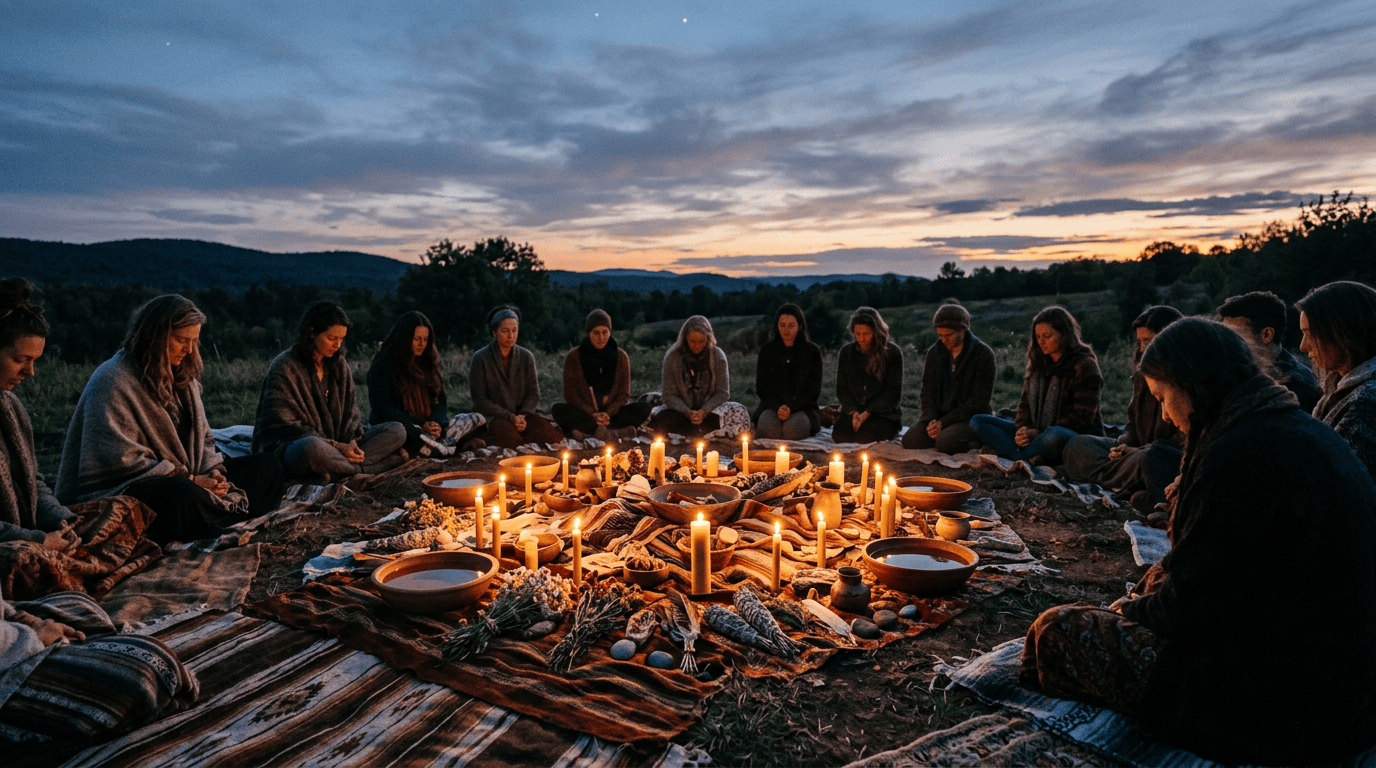
Grief belonged to the community. It wasn’t a private problem to manage quietly. People gathered, sat, wept and kept watch together.
Grief was given a body and a voice. Keening, wailing, drumming, singing, dancing, ceremony. The pain moved through the body, instead of living inside it for decades.
The dead stayed in relationship. They were visited, fed, spoken to and remembered, not filed away.
A great loss could mean a part of the soul had left. Healing didn’t mean “getting over it.” It meant calling that part home.
Grief was ancestral. Your sorrow was never only yours. It could carry the unfinished grief of those who came before, which is why lineage and family patterns mattered in healing.
When a loss was marked with ritual, witnessed by others and given somewhere to go, people didn’t have to carry it in silence for decades.
Maybe that’s why so many of us feel that our grief has no place to land. We were never meant to do it alone, in private, on a schedule. There is nothing wrong with you. You’re living inside a culture that forgot how to hold this.
I share these traditions with respect, as windows and not as something to borrow or claim. They are living cultures, they differ between peoples and families, and their keepers are the ones who can speak for them fully. This work walks alongside, never instead of, medical or psychological support, especially if you’re in acute distress.
Next week: going deeper
Next week, I’m going deeper into this (Follow me on Instagram) :
- How ancient and living traditions understand and heal grief
- What soul loss really means, and why it speaks to losses with no name
- How these old ways meet the nervous system and the body
- What you can bring from them into your life now
You don’t have to be over it. You only have to be willing to stop carrying it alone.

